Cassie Therrien-Abell
Why You Should Stop 'Warming Up' and Start Movement Prep
Exercise
.webp)

TL;DR: The term "warm-up" is misleading. Just getting your body temperature up and heart rate up isn't enough. Your muscles need to know what they're going to be expected to do that day. Walking on a treadmill only prepares you to do step-ups, not deadlifts or squats. The most effective way to prepare for a workout is to include movements specific to what you're doing that day. I prefer to call it "movement prep."
Today we're going to talk about the concept of warming up and the right and wrong way to prepare for a workout.
The term warm up gives a very broad representation of what you should be doing before a workout that's not always ideal.
Because it's called a warm-up, a lot of times the concept is that all you have to do is get your body temperature up, get your heart rate up, and you're good to go and safe.
That also results in people doing the exact same thing before every single workout. Which isn't always ideal.
In order to effectively prepare for a workout, you don't just need to get warm. You need to make sure that your body and your muscles know what they're going to be expected to do and they're prepared for that.
Yes, having your body temperature up to a certain point is important because cold muscles don't stretch and contract the same way. That's going to be a problem.
But there are a lot of components to every workout, and the most effective way to prepare is to include movements that are specific to that workout.
A lot of people's warm-up tends to look something like spending some time on a treadmill or elliptical and maybe doing some world's greatest stretch or some general dynamic movements.
That does get you warm. But if you think of the movement that goes into walking on treadmill or elliptical or doing those dynamic exercises: all you're really getting your body ready to do is step-ups. Because that's the movement you're truly mimicking. Or walking.
If you're preparing for specific kinds of workouts, ideally you get yourself warm and also include movements specific to what you're doing that day.
WorkoutMovement Prep FocusExample ExercisesDeadlift dayCore bracing, hip hinge, hamstring/glute activationKettlebell hinges, glute bridgesSquat dayCore bracing, hip/knee mobilityQuadruped rocking, goblet squat holdsUpper bodyShoulder mobility, coreHalos, band pull-aparts
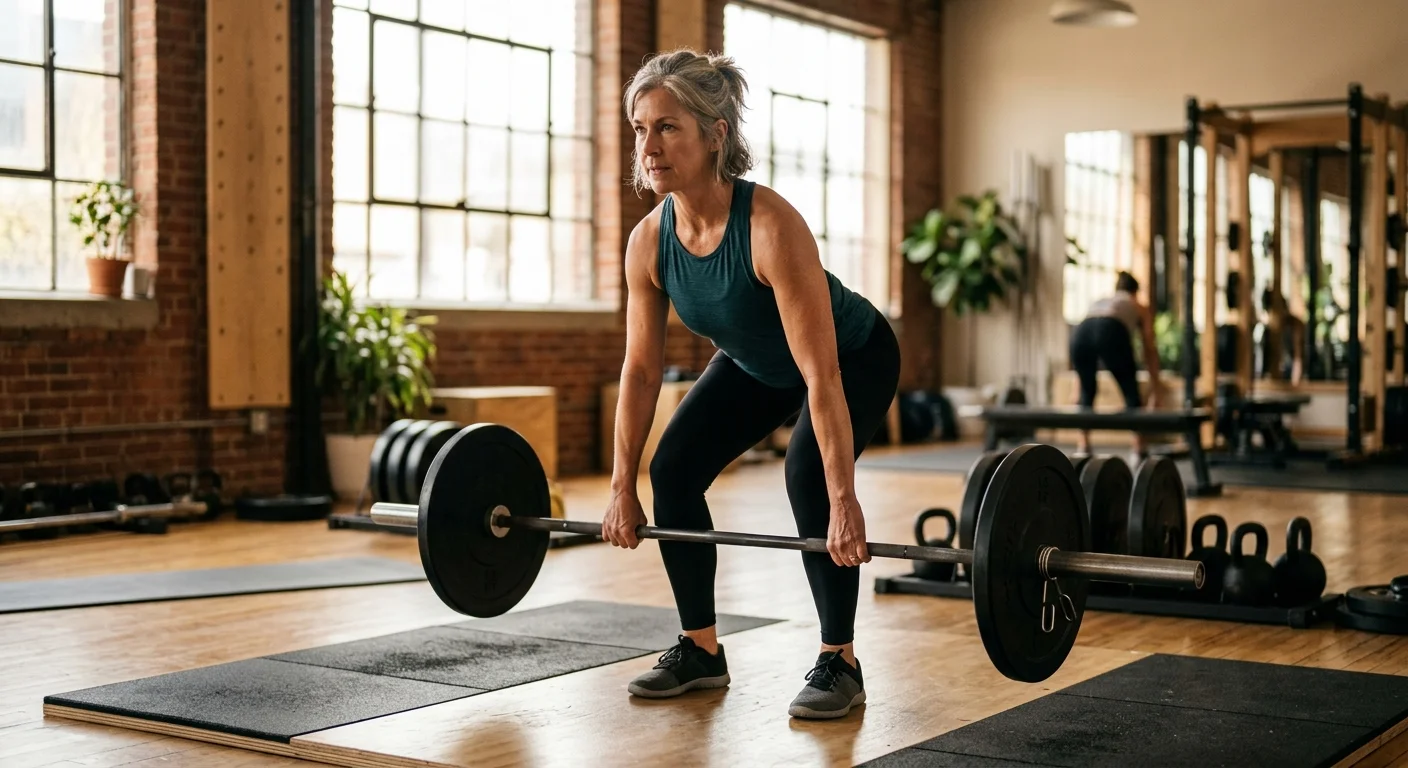
If you're going to be deadlifting that day, you want to get your body ready. You want to brace your core, which is always going to be one of the more important parts of what I prefer to call movement prep.
Make sure you're able to brace, that the musculature is awake and active, and that it's been told what it's supposed to be doing that day.
Do some light core activity to wake up your core, and then some movement that specifically mimics what you're going to do.
A deadlift is really just hinging back, reaching for the bar, making sure you're tight, and then coming back up.
One example I like is holding a kettlebell behind you because this gets you to that open chest position, bracing your core, and then just doing a hinge. Push the butt back, make sure you're hinging at the hips only, and then coming back up. My hamstrings and glutes have to be active, my core has to be braced to avoid curving in the spine, and I'm opening up my chest.
Just because you know what to do doesn't mean that your muscles always do. They're not always ready. I have to reteach my hips to hinge correctly every single time I workout.
For a squat day, mimic a squat but in a more controlled environment. Take that squat movement and almost exactly turn it 90 degrees so you're on all fours, shoulders locked back.
This teaches you to move your knees and hips correctly before your squat, and it also wakes up your core. Double duty.
Get to a neutral spine (no tucking or over arching, nice and neutral with a nice s-curve) and very slowly shift your weight back. Focus on not allowing your tailbone to tuck under as you go. Go as far as you can, just like you're going through the bottom of the squat, and then shift your weight forward.
The biggest focus is always your core. It's one of the most important parts of movement prep, no matter what you're doing. But beyond that, your prep should mimic what you're about to do, not just get you warm.

.webp)


