Brian Abell
How to Prevent Muscle Loss on GLP-1 Medications
Exercise
.webp)
Bottom line: GLP-1s will help you lose weight, but if you're not doing any resistance training, a chunk of what you're losing is muscle, not just fat. That means a slower metabolism, a softer look, and results that don't stick. Here's what actually keeps your muscle while the weight comes off.
When you're taking a GLP-1, your appetite gets significantly suppressed. That's the drug doing its job. But if you're not doing anything to maintain the muscle you already have, your body starts pulling from whatever it can for fuel, fat and muscle both.
So yes, the number on the scale goes down. But if you're losing muscle alongside the fat, you're not going to look or feel the way you expected when you hit your goal weight.
This is the part nobody talks about enough. A lot of women come to us thinking they need to lose more body fat. But when we run an InBody scan, it's not that they have too much fat. They just don't have enough muscle.
Without muscle, even after losing significant weight, you can end up with a "deflated" look. Softer arms. Less firmness. A smaller frame that still doesn't feel toned. That's not a fat problem. That's a muscle problem.
No. And this is the pushback we get from almost every woman we start working with: "I don't want to get big and bulky. I just want to lose weight and tone up."
Totally fair. But here's the thing: you can't look toned without muscle. Toned is just what muscle looks like under the skin. The goal doesn't have to be a bigger squat or a bench press number. Frame it around what you actually do in your life. Picking up your kids. Carrying groceries in from the car. Hiking, gardening, whatever you enjoy. Your program can be built around making those things easier and made more enjoyable, not around arbitrary strength goals.
Resistance training. That's the non-negotiable here. But it doesn't have to mean a barbell or a gym. Body weight exercises, resistance bands, cables, anything that puts some external load on your muscles gives your body a reason to hold onto them.
Walking is great. Cardio is great. But cardio alone won't maintain muscle mass on a GLP-1. Resistance training has to be in the mix. For exactly how to structure those sessions — rep ranges, frequency, and scheduling around your dosing days — see our strength training guide for GLP-1 users.
The research backs this up. Studies consistently show that resistance training combined with adequate protein intake is the most effective strategy for preserving lean mass during caloric restriction. (ACSM)
This is where most people fall short, and it gets harder on a GLP-1 because your appetite is so suppressed.
A realistic and evidence-based protein target is 1.4 to 2.0 grams of protein per kilogram of body weight. (ISSN, Journal of the International Society of Sports Nutrition) The old "one gram per pound of bodyweight" recommendation comes from bodybuilding culture and was never meant for the general population. Chasing that number while on a GLP-1, when you're barely hungry, is just going to make you miserable.
The goal is to hit a realistic range, not force food down.
When your appetite is suppressed, heavy meals aren't going to happen. So go protein-dense and low volume.
Center your meals around protein first. Fill in vegetables and whatever carbs you can manage around that. Whatever you can realistically get in. We're never about forcing food down, that's not a healthy relationship with eating and it's just not sustainable on these medications.
Muscle is metabolically active tissue. The more you have, the higher your resting metabolism. That means your body burns more calories even at rest, which makes the weight loss phase more efficient and helps the results actually stick once you get there.
Building or maintaining muscle while on a GLP-1 means you're more likely to reach your goal weight looking the way you actually hoped to look, not lighter but still soft. And you're less likely to regain when you eventually come off the medication.
GLP-1s are a tool. Resistance training and protein are what make that tool work the way it's supposed to. If you're ready to put it all together, get the full workout plan built specifically for women on GLP-1 medications.
Written by Brian Abell, ACE Certified Personal Trainer, Precision Nutrition Coach
Answer 5 quick questions and get a personalized plan based on your current routine and medication schedule.
Question 1 of 5
Are you currently taking a GLP-1 medication?
Question 2 of 5
How often are you currently exercising?
Question 3 of 5
What does your workout routine mostly include?
Question 4 of 5
What is your biggest concern right now?
Question 5 of 5
When do you typically schedule your GLP-1 injection?
Your personalized plan is ready. Enter your name and email to see it now.
Please enter a valid email address.
No spam. Unsubscribe anytime.
The medication is doing its job on appetite and blood sugar. But without regular strength training, a significant portion of the weight you lose will be muscle, not just fat. That makes it harder to keep the weight off long-term and can leave you feeling weaker and more fatigued.
Where to focus first:
Want a personalized plan built around your medication schedule and current fitness level? We work with women on GLP-1s every day.
Book a Free Discovery CallYou are already moving, which puts you ahead of most people starting a GLP-1 protocol. The opportunity now is in the details: injection timing, exercise intensity relative to your dose schedule, and making sure your workout type matches your goal. Small adjustments here compound significantly over time.
Where to optimize:
Want a plan that accounts for your specific schedule, medication timing, and goals? That is exactly what we build for our clients.
Book a Free Discovery CallYou are already doing the most important things: exercising consistently and including strength work. At this stage, the gains come from progressive overload, precision nutrition timing, and making sure your recovery is keeping pace with your output. This is where a coach makes the biggest difference.
What to focus on now:
You are in a great position. A coach can help you make sure every workout and every meal is moving you forward. Let us talk.
Book a Free Discovery Call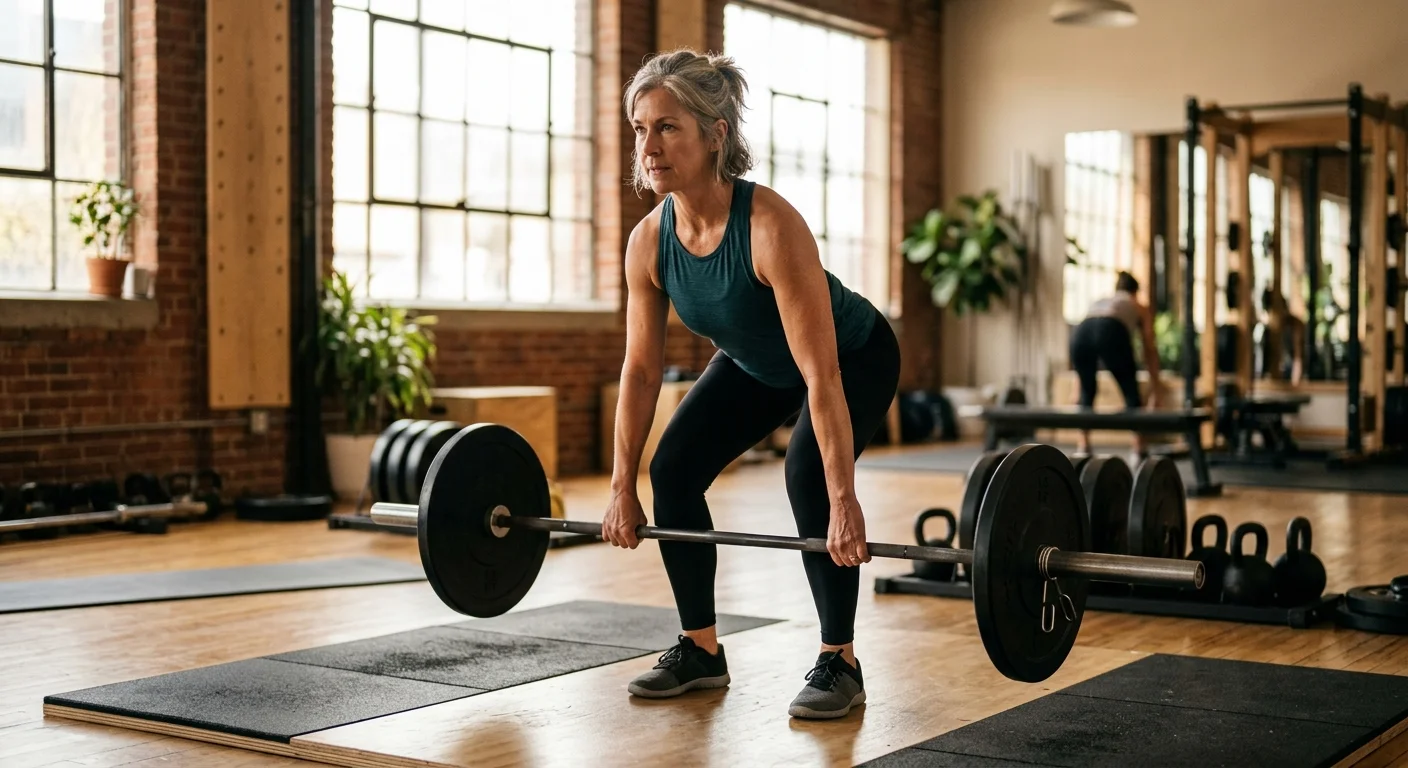

.webp)


