Brian Abell
Can You Take a GLP-1 During Menopause and Still Build Muscle?
Nutrition
.webp)
Menopause and a GLP-1 hitting at the same time is a specific kind of frustrating. You finally have appetite and cravings under control, the scale is finally moving, and somewhere underneath that progress you are also dealing with hot flashes, changing sleep, and a body that does not respond to training the way it used to.
We work with a lot of women navigating exactly this overlap. Here is what is actually happening, and what changes what you do about it.
Estrogen plays a real role in maintaining muscle mass and strength, not just in reproductive health. As estrogen declines through perimenopause and menopause, women tend to lose muscle and strength at a faster rate than men of the same age, independent of anything else going on. That is already happening in the background before a GLP-1 enters the picture.
Layer rapid weight loss on top of that, and the math gets less forgiving. Even in the general GLP-1 population, research shows that somewhere between 20 and 40 percent of total weight lost can be lean mass rather than fat if resistance training and protein are not part of the plan. For a woman already losing muscle from hormonal changes, that is not a small detail. It is the difference between coming out the other side leaner and stronger, or coming out the other side lighter and weaker.
The scale cannot tell you this on its own, which is exactly why we do not want you fixated only on that number. Two women can lose the same 20 pounds and end up in completely different places, one leaner and stronger, one smaller but softer and weaker. The difference almost always comes down to protein intake and whether resistance training was part of the picture during the loss.
If you have access to a body composition scan or even just a tape measure and consistent progress photos, those tell you a lot more than the scale does about which direction things are actually heading.
We generally coach clients toward 1.2 to 1.6 grams of protein per kilogram of body weight during active weight loss on a GLP-1, and for women navigating menopause on top of that, staying toward the higher end of that range is usually worth it. That is genuinely hard to hit when your appetite is suppressed, which is exactly why we spend so much time with clients figuring out how to get there in small, manageable amounts across the day rather than trying to eat one large meal you do not actually want.
A protein shake in the morning when food sounds unappealing, Greek yogurt or cottage cheese as an easy add-in, eggs instead of cereal. None of it needs to be complicated. It needs to be consistent.
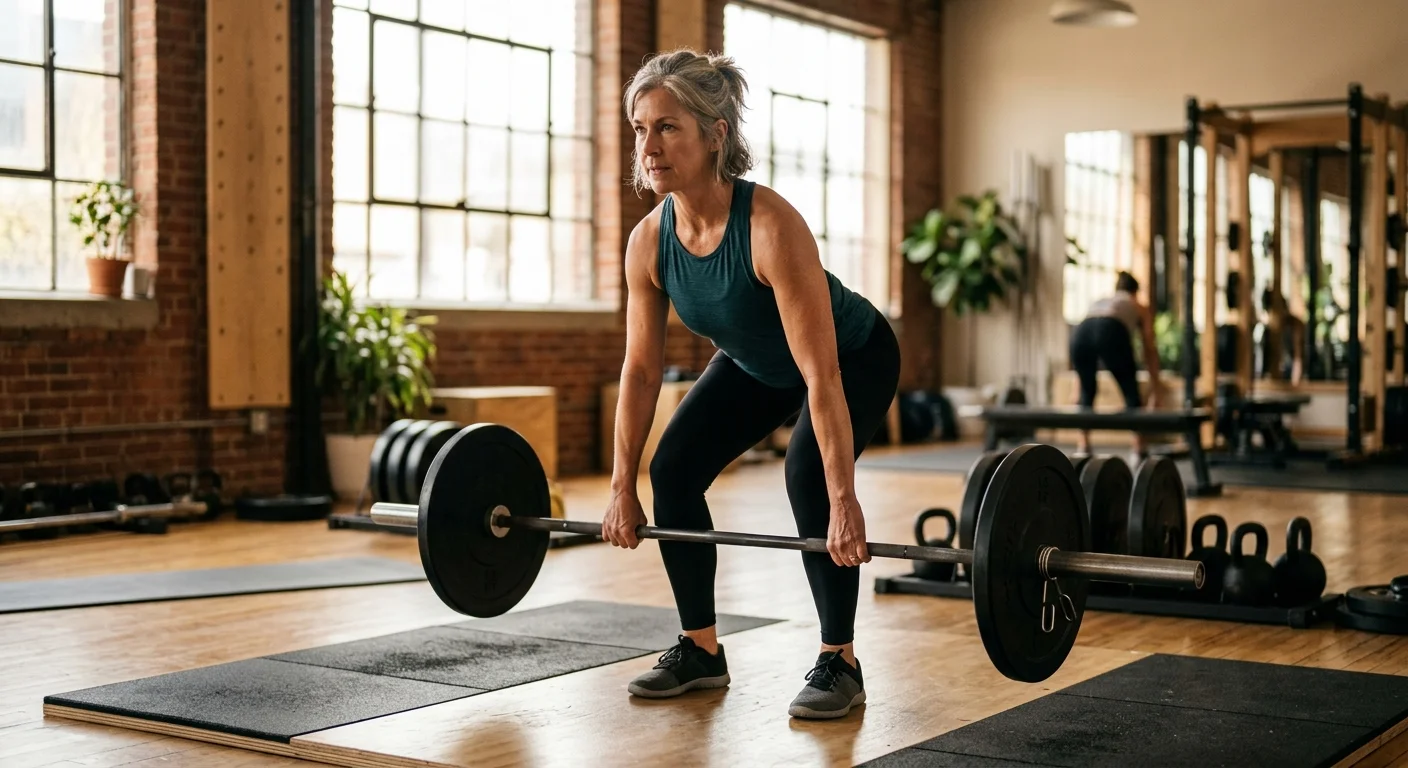
Full body resistance training two to three times a week, hitting the major movement patterns, squatting, hinging, pushing, pulling, and carrying. You do not need to train like a bodybuilder. You need to load your muscles and your skeleton regularly enough that your body has a reason to hold onto both instead of letting them go.
If joints are cranky or you are new to lifting, start with bodyweight, bands, or light dumbbells and build from there. What matters more than the exact load is that you are showing up consistently and the difficulty is progressing over time, even slowly.
Walking is genuinely good for you, for blood sugar, for mood, for cardiovascular health, and we are not going to talk anyone out of it. But walking alone does not provide enough of a loading stimulus to protect muscle and bone the way resistance training does. Think of them as covering different jobs. Walking supports your heart and your daily energy. Lifting is what tells your body it still needs the muscle and bone it has.
Two strength sessions a week is a realistic starting point for most women in this exact situation, appetite suppressed, hormones shifting, energy unpredictable some days. Pair that with a protein target you are actually hitting most days, not perfectly, just consistently, and give yourself permission to judge progress by more than the scale. The number will move. What happens underneath it is what we actually care about, and it is fully within your control regardless of what your hormones are doing this month.
Maltais ML et al. "Changes in muscle mass and strength after menopause." Journal of Musculoskeletal and Neuronal Interactions. 2009. PubMed
"Muscle health in the modern era of incretin-based therapies." Obesity Reviews. 2025. PubMed



.webp)


