.webp)
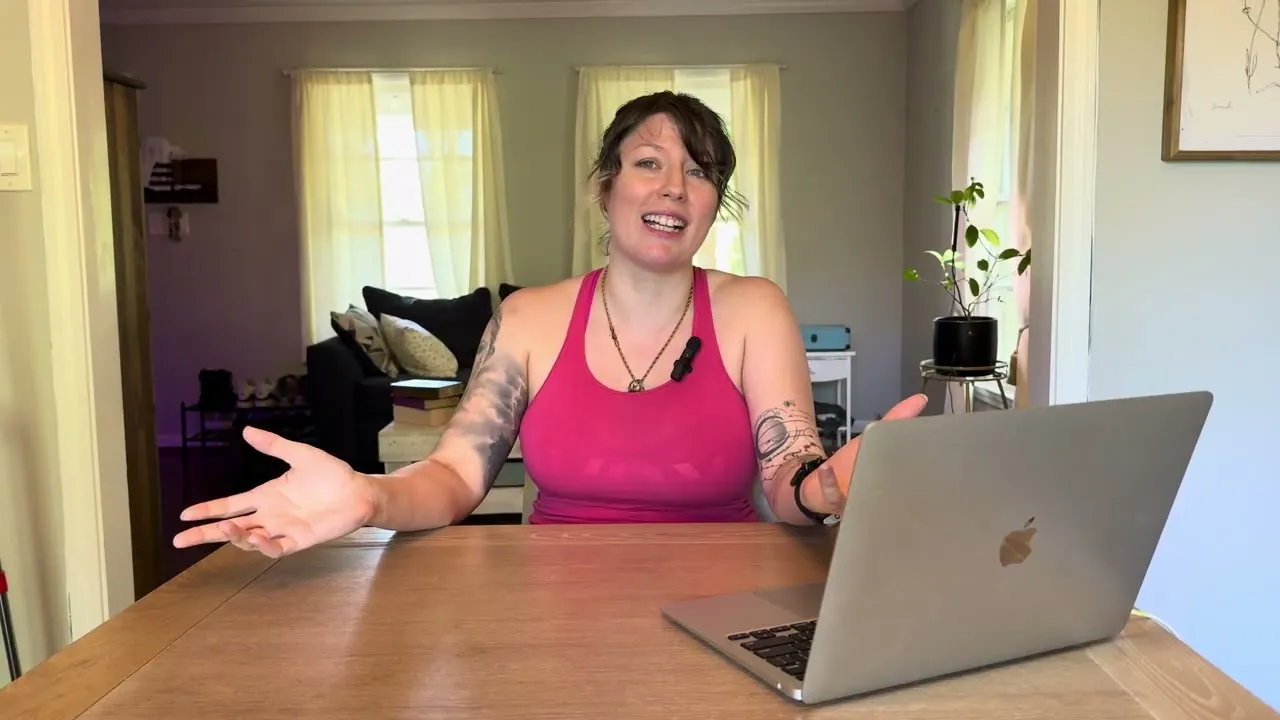
Can You Exercise During Pregnancy?
Short answer: almost certainly yes, and you probably should. The general rule is anything you've been doing consistently for at least six months before getting pregnant, you can keep doing. Just not at a max-effort level, and with some modifications as your belly grows. Here's what that actually looks like in practice.
By Cassie Therrien-Abell | Category: Exercise
Originally recorded as a video: Watch on YouTube
Why does pregnancy make you feel so terrible in the first trimester?
Before we get to exercise, let's talk about why you feel like garbage, because it actually connects to everything else.
Pretty early on, around weeks four or five, your blood volume starts increasing rapidly to supply the baby and eventually the placenta. That has a powerful effect on your blood sugar. And changes in blood sugar are what cause a lot of the nausea, fatigue, headaches, and digestive issues you're experiencing in those early weeks.
Nobody tells you that part. Most pregnancy content just says "eat five small meals a day" without explaining that you're doing it to stabilize blood sugar, not because small meals are inherently virtuous.
For me personally, symptoms hit hard right at week six and didn't start tapering off until week 12 or 13. If you're in that window right now, I see you.
What actually helps with pregnancy nausea?
The most effective thing I found: get food in your body as fast as humanly possible after you open your eyes.
My husband would bring me a cup of yogurt and a piece of fruit while I was still laying in bed, before I even sat up. If you don't have someone who can do that, put a cooler or mini fridge next to your bed with something small and eat it the second you're awake.
Eating frequently throughout the day, even just snacks, keeps your blood sugar from crashing and reduces nausea. It's not going to make it disappear, but it helps.
A few other things that actually worked for me:
- Ginger, in whatever form you can tolerate. I loved ginger candies until I ate them so constantly that they became a food aversion. Then I switched to ginger soda and ginger ale.
- Cold food over hot food. If hot food made you nauseous too, you're not alone. I couldn't even stomach hot water. I got a little ice crusher and made myself slushies just to stay hydrated.
- Cold, protein-forward foods: yogurt, chicken salad, chickpea salad, sandwiches. Not glamorous, but it works.
And if it got really bad and the only option was fast food? I just tried to pick something with protein and vegetables and moved on. This is not a time to aim for perfection. It's a time to eat often and wait it out.
One caveat: if you're throwing up frequently and can't keep food down, that's a conversation with your doctor. Occasional nausea and food aversion is normal. Not being able to keep anything down is a different situation.
What exercises are actually safe during pregnancy?
Almost everything you were already doing.
The general rule, and this is backed by most major OB-GYN and sports medicine guidelines, is that if you've been doing an activity consistently, at least a couple times a week, for six months or more before getting pregnant, you can continue at that same capacity.1 Your body will tell you if and when it needs to back off.
I'm an aerialist. I do aerial silks, lyra trapeze. I'm still doing aerial silks at five months pregnant because I've been doing it for years. I did stop lyra because I'd only started it a few months before getting pregnant. New skills or apparatuses aren't where you want to be experimenting right now.
I have a client who's pregnant and plays tennis. She's going to keep playing tennis for as long as her body allows, with input from me and her doctor.
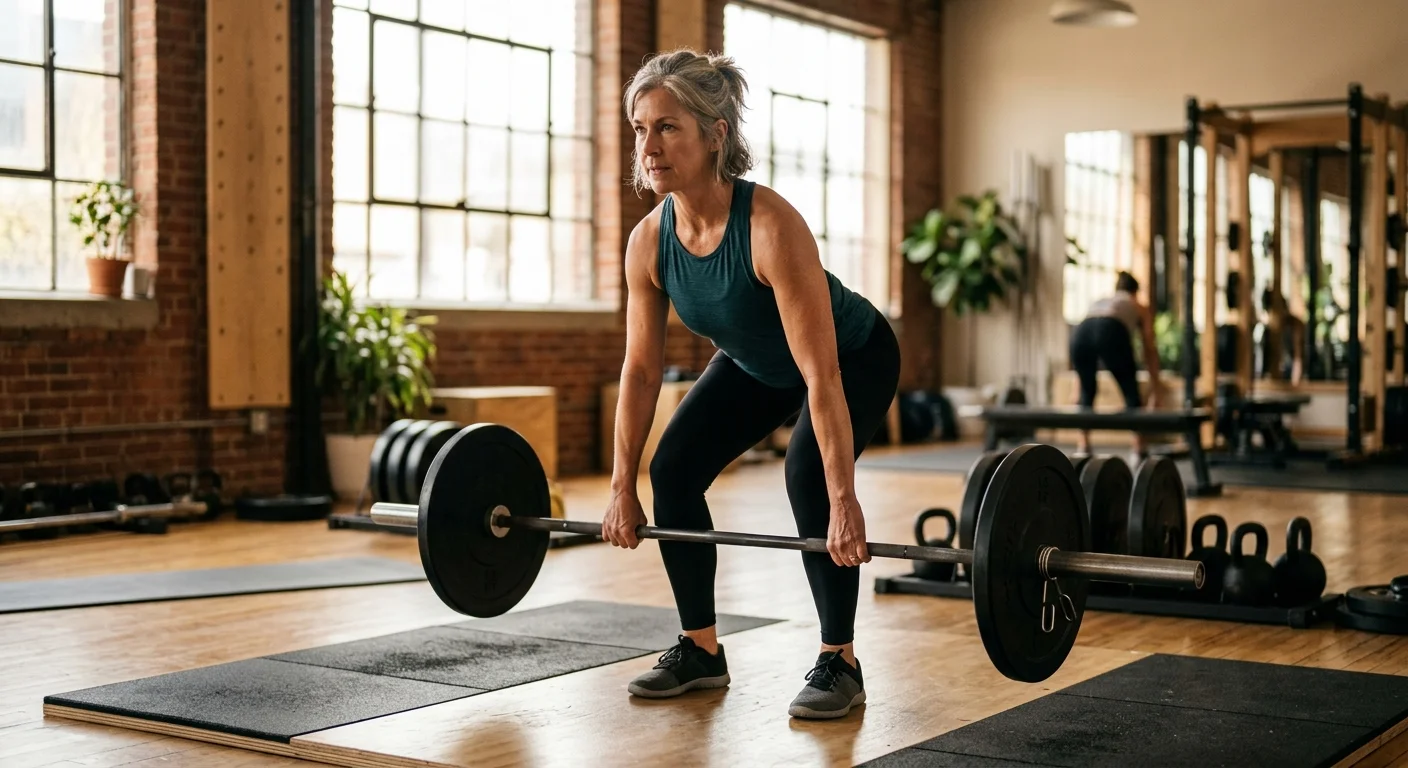
Weightlifting, running, swimming, Pilates — it's all on the table if you were already doing it. The one thing to be careful about is maxing out. Going all-out on a max lift or max-effort sprint spikes blood pressure, and elevated blood pressure during pregnancy isn't something you want to mess around with. That's not a "weightlifting is dangerous" thing, it's a blood pressure management thing. Your regular program at your regular weights? Keep going.
Should you do core work while pregnant?
Yes. And this one really matters.
There's a condition called diastasis recti, where the two bands of your rectus abdominis (your "abs") separate as your belly stretches. If your core isn't strong enough to manage that stretch, the muscles open up and leave a gap in the middle of your abdomen. It's recoverable, but it can be really hard to recover. In extreme cases, it requires surgery.2
The best way to avoid it is learning proper core bracing — what I describe to clients as "corseting." Place your hands on the sides of your abdomen and think about lacing those two muscle bands together, drawing them in. Practice that bracing action during any exercise you're doing, even if you're not doing dedicated core work.
For most people, exercises like dead bugs, planks, and knee raises are fine during pregnancy. Crunches and sit-ups aren't great regardless of whether you're pregnant. If isometric holds like planks are a concern because of blood pressure history or preeclampsia risk, talk to your care team. But core work of some kind — please keep doing it.
What if symptoms are making it hard to stay active?
This is not a "power through it" situation.
If you're nauseous, getting headaches, feeling fatigued and lightheaded, that's not a good time to work out. That's a blood pressure issue waiting to happen, and you don't want to push that during pregnancy.
When my symptoms were at their worst, my week looked like one workout if I felt up to it — whether that was an aerial class on a good day or just moving around the gym doing whatever I could handle without feeling awful. And then walks. As many days as I could manage. There were about four weeks where that was the best it got.
As symptoms started to taper, I'd get two workouts in plus walks most days. Before pregnancy, I was active at a moderate to high level seven days a week. That dropped, and that was the right call.
Why does staying active during pregnancy actually matter?
Any amount of activity during pregnancy helps you, the baby, and birth. More activity generally means an easier labor relative to what it would have been for you. That doesn't mean birth is going to be easy, but if it was going to be really hard, staying active can bring that down a little.3 When we're talking about one of the most painful experiences a person can go through, reducing it even a little matters.
Staying active also helps manage blood sugar throughout pregnancy, which loops back to managing a lot of those symptoms in the first place.
Don't be hard on yourself if your activity level drops for a few weeks. For most people, symptoms do taper. It's temporary. Do your best, listen to your body, and know that even when you're feeling great, some modifications are just part of the deal. But staying as active as you can — even if that's just walking — is always worth it.
Sources:
- Exercise during pregnancy guidelines: ACOG Committee Opinion No. 804, Obstetrics & Gynecology, 2020
- Diastasis recti and core exercise during pregnancy: Lee D & Hodges PW, Journal of Orthopaedic & Sports Physical Therapy, 2016
- Physical activity and labor outcomes: Domenjoz I et al., American Journal of Obstetrics & Gynecology, 2014
Free 60-second quiz
Is Your Workout Helping or Hurting Your GLP-1 Results?
Answer 5 quick questions and get a personalized plan based on your current routine and medication schedule.
Question 1 of 5
Are you currently taking a GLP-1 medication?
Question 2 of 5
How often are you currently exercising?
Question 3 of 5
What does your workout routine mostly include?
Question 4 of 5
What is your biggest concern right now?
Question 5 of 5
When do you typically schedule your GLP-1 injection?
Almost there
Where should we send your results?
Your personalized plan is ready. Enter your name and email to see it now.
Please enter a valid email address.
No spam. Unsubscribe anytime.
Your Results
Your GLP-1 may be working harder than your workouts right now.
The medication is doing its job on appetite and blood sugar. But without regular strength training, a significant portion of the weight you lose will be muscle, not just fat. That makes it harder to keep the weight off long-term and can leave you feeling weaker and more fatigued.
Where to focus first:
- Add 2 to 3 strength sessions per week, even short 30-minute ones. This is the single most important thing for GLP-1 users.
- Time your injection on a rest day if possible, so your hardest workouts happen when nausea is lowest.
- Prioritize protein at every meal to give your muscles the material they need to hold on during a calorie deficit.
Want a personalized plan built around your medication schedule and current fitness level? We work with women on GLP-1s every day.
Book a Free Discovery CallYour Results
You are building good habits. Here is the piece most GLP-1 users miss.
You are already moving, which puts you ahead of most people starting a GLP-1 protocol. The opportunity now is in the details: injection timing, exercise intensity relative to your dose schedule, and making sure your workout type matches your goal. Small adjustments here compound significantly over time.
Where to optimize:
- Schedule your most intense workouts 3 to 5 days after your injection, when side effects are typically lowest.
- If you are doing mostly cardio, add at least one strength session per week to protect muscle during weight loss.
- Track how you feel in the 24 to 48 hours post-injection and adjust workout intensity accordingly. Your body will tell you a lot.
Want a plan that accounts for your specific schedule, medication timing, and goals? That is exactly what we build for our clients.
Book a Free Discovery CallYour Results
You are ahead of most GLP-1 users. Here is how to lock in your results.
You are already doing the most important things: exercising consistently and including strength work. At this stage, the gains come from progressive overload, precision nutrition timing, and making sure your recovery is keeping pace with your output. This is where a coach makes the biggest difference.
What to focus on now:
- Make sure you are progressively increasing weight or reps over time, not just repeating the same sessions.
- Front-load protein earlier in the day, especially on days when GLP-1 side effects suppress your appetite in the evening.
- Consider tracking body composition (not just scale weight) every 4 to 6 weeks to make sure you are losing fat and holding muscle.
You are in a great position. A coach can help you make sure every workout and every meal is moving you forward. Let us talk.
Book a Free Discovery Call


.webp)


