Brian Abell
Do GLP-1 Medications Work Without Exercise? What Women Should Know
Exercise
.webp)
Bottom line: yes, they work. You can lose weight on Ozempic, Wegovy, or Mounjaro without adding exercise. The catch is that the results are much less likely to stick, and you'll end up right back where you started once the medication changes. Exercise isn't the price of admission. It's what makes everything you worked for last.
This comes up a lot, and underneath the question is usually a more honest one: "Am I doing enough?" So let's actually answer both.
Yes. The medication works on a real mechanism: it regulates blood sugar, reduces appetite, and slows digestion. You will likely lose weight on it without changing anything else. A lot of people do.
The problem is that weight loss without any supporting lifestyle change tends to be weight loss from everywhere, including muscle. And when you come off the medication or reduce the dose, the metabolic infrastructure isn't there to hold the results. The weight comes back. Not because the medication failed. Because nothing else changed.
Muscle is your resting metabolism. It's what determines how many calories your body burns when you're not doing anything. Resistance training builds and preserves that muscle while the medication is helping with the rest. Without it, you're losing weight but not building the system that keeps it off.
There's also the bone density piece. GLP-1 medications are associated with increased risk of bone loss over time. Resistance training directly counters that. It's one of the few things that actually builds bone density rather than just slowing the loss. If you're spending real money on medication and putting in the effort, protecting the structural side of that investment matters. One of the biggest risks of skipping exercise on a GLP-1 is preventing muscle loss on GLP-1s — and it's more of a problem than most people expect.
A lot less than most people assume. ACSM published their first major resistance training guidelines update in 17 years in 2026, synthesizing data from 137 systematic reviews and more than 30,000 participants. The headline finding: the biggest benefits come from moving from no resistance training to any resistance training. Twice a week, any modality — barbells, bands, machines, or body weight — and the main driver of results is consistency, not complexity.
For general strength, the guidelines suggest working at around 80% of your max effort for 2 to 3 sets per exercise. For most people that's not a number you calculate. It's the weight where the last few reps feel genuinely hard but you could still do one or two more. That's the zone. Twice a week, challenge yourself in that range, and do it week after week. That's the bar.
That's not a bodybuilder's routine. That's not a professional athlete's schedule. It's two sessions a week that fit inside a real life with kids, work, caregiving, and everything else competing for the same hours. For a full breakdown of how to actually do this safely on a GLP-1, see how to exercise safely on GLP-1 medications.
Because somewhere along the way the standard got set by people whose full-time job is their body. Professional athletes and competitive lifters train the way they do because their sport requires it and their schedule allows it. That's not the benchmark for a mom with a full-time career and a commute. It was never supposed to be.
The clients who come to FitHappens feeling like they've failed at exercise have almost always been holding themselves to a standard that was never realistic for their life. They didn't fail. They just had the wrong target. Two days a week of something you can actually do, week after week, beats five days a week of something you burn out on in three weeks every time.
More energy as the medication stabilizes your blood sugar and exercise improves your cardiovascular baseline. Better body composition, meaning less fat and more muscle at the same or lower weight. Stronger bones. A metabolism that holds your results after the medication. And honestly, the confidence that comes from a body that can do things, not just weigh less.
The frame of "I have to exercise or the medication won't work" is the wrong one. A more useful frame is: the medication is doing heavy lifting on one side of the equation. Exercise is protecting everything you're gaining and making sure it stays when the medication isn't doing that work anymore.
You don't have to earn the medication with a perfect workout routine. You don't have to train like an athlete to see results. Two resistance training sessions a week, whatever form that takes, is genuinely enough to change the long-term outcome. Start there. Build from there. Make it fit your life, not someone else's.
The goal isn't the number on the scale while you're on the medication. The goal is keeping it when you're not.
Sources: Resistance training frequency, modality, and consistency recommendations: ACSM 2026 Resistance Training Position Stand, synthesizing 137 systematic reviews and 30,000+ participants. Full Position Stand published in Medicine & Science in Sports & Exercise (2026).
Answer 5 quick questions and get a personalized plan based on your current routine and medication schedule.
Question 1 of 5
Are you currently taking a GLP-1 medication?
Question 2 of 5
How often are you currently exercising?
Question 3 of 5
What does your workout routine mostly include?
Question 4 of 5
What is your biggest concern right now?
Question 5 of 5
When do you typically schedule your GLP-1 injection?
Your personalized plan is ready. Enter your name and email to see it now.
Please enter a valid email address.
No spam. Unsubscribe anytime.
The medication is doing its job on appetite and blood sugar. But without regular strength training, a significant portion of the weight you lose will be muscle, not just fat. That makes it harder to keep the weight off long-term and can leave you feeling weaker and more fatigued.
Where to focus first:
Want a personalized plan built around your medication schedule and current fitness level? We work with women on GLP-1s every day.
Book a Free Discovery CallYou are already moving, which puts you ahead of most people starting a GLP-1 protocol. The opportunity now is in the details: injection timing, exercise intensity relative to your dose schedule, and making sure your workout type matches your goal. Small adjustments here compound significantly over time.
Where to optimize:
Want a plan that accounts for your specific schedule, medication timing, and goals? That is exactly what we build for our clients.
Book a Free Discovery CallYou are already doing the most important things: exercising consistently and including strength work. At this stage, the gains come from progressive overload, precision nutrition timing, and making sure your recovery is keeping pace with your output. This is where a coach makes the biggest difference.
What to focus on now:
You are in a great position. A coach can help you make sure every workout and every meal is moving you forward. Let us talk.
Book a Free Discovery Call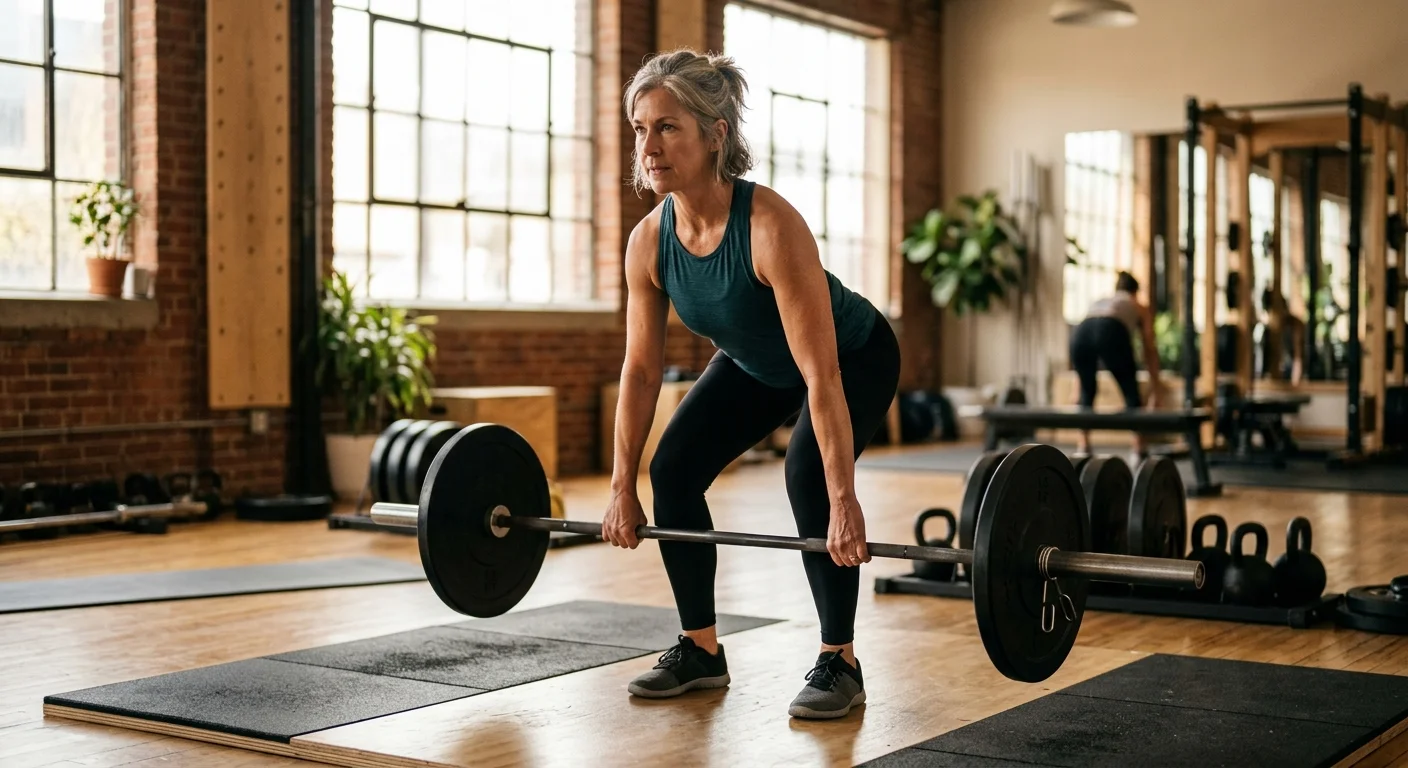


.webp)


