
Cassie Therrien-Abell
Exercising on GLP-1 Medications: A Women's Guide to Ozempic, Wegovy, Mounjaro & Zepbound
Exercise
.webp)
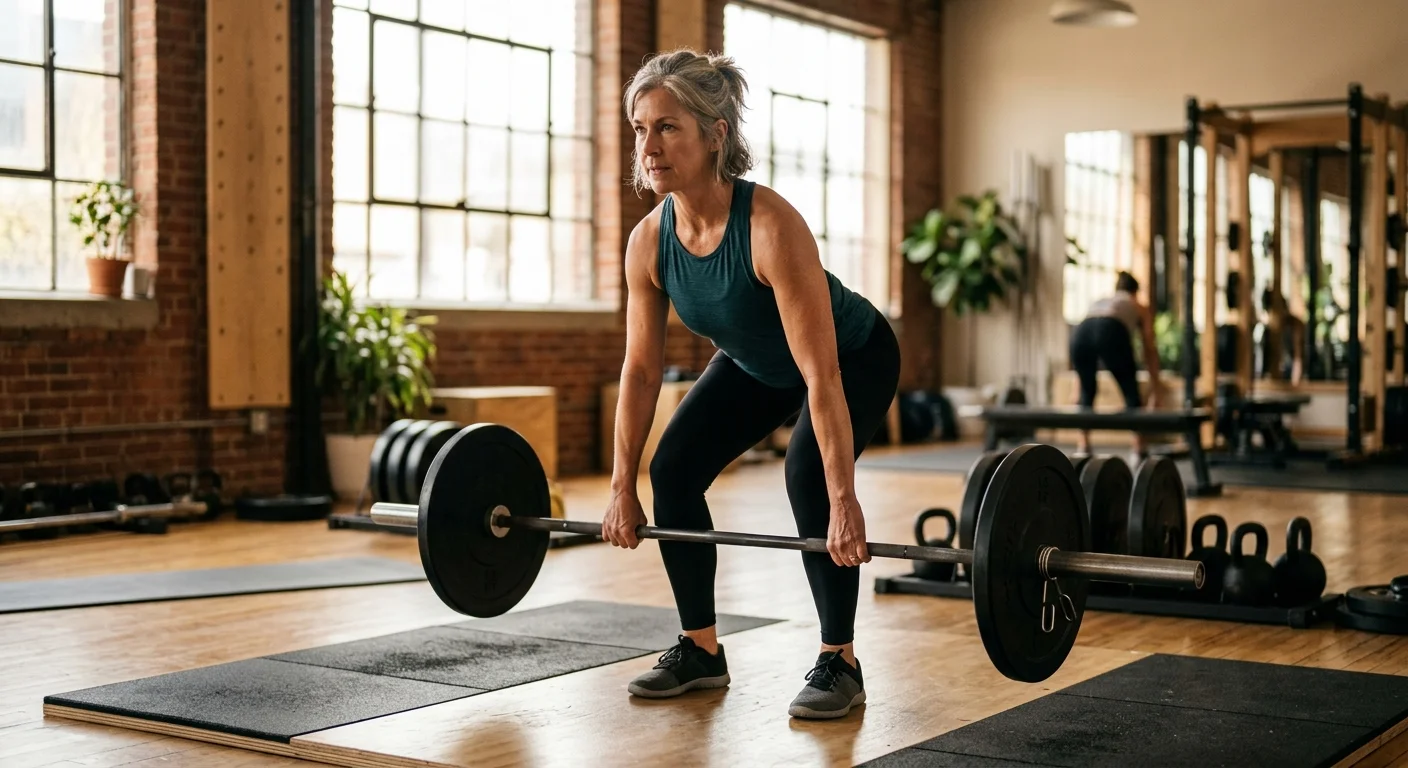
Women on GLP-1 medications — including Ozempic, Wegovy, Mounjaro, and Zepbound — who add resistance training to their treatment preserve significantly more muscle mass than those who rely on the medication alone. Without exercise, a meaningful portion of GLP-1-assisted weight loss comes from muscle rather than fat, worsening body composition even as the scale drops. Two to three strength sessions per week directly counters this while also improving insulin sensitivity, supporting bone density, and stabilizing joints during rapid weight loss.
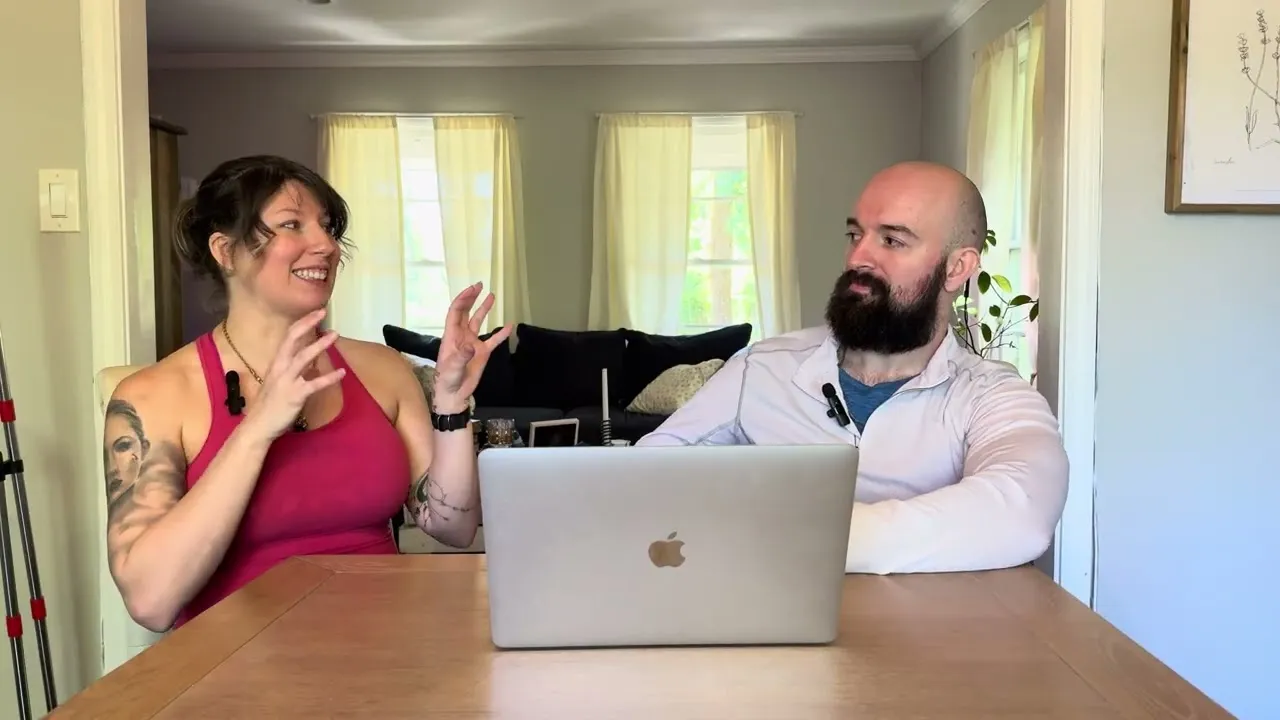
By Brian Abell & Cassie Therrien-Abell | Category: Exercise
Originally recorded as a video: Watch on YouTube
No, you don't have to do anything.
But here's what happens if you don't: the scale moves while you're on the drug, you stop taking it (because you can't be on it forever), and then a few months later you're right back where you started. Except now your body composition is worse than before — you've lost muscle along with fat, your metabolism is slower, and mentally it's even harder to start over.
We've seen this pattern. It's not a hypothetical. If you're still weighing whether exercise is truly necessary, we broke that down fully in do GLP-1s work without exercise?
GLP-1s like semaglutide are genuinely different from older weight loss drugs. Most weight loss drugs are basically stimulants that kill your appetite and hope the rest fills itself in. GLP-1s actually address insulin resistance, which is something a huge percentage of people are dealing with to some degree. That's why they were originally developed for people with diabetes. The weight loss results came after, and then the boom happened.
But any medically assisted weight loss still needs habit support underneath it. The drug is not the habit. The drug just makes everything faster.
Think of it as an additive, not a replacement. It's going to get you to your goal faster, and it's going to help you come off of it sooner. But when you do come off, you need something in place: working out a few times a week, some nutrition changes that actually stuck. Otherwise you're just borrowing time.
And these drugs aren't cheap. If you want to look at it from a purely financial angle, don't flush that investment by coming off the drug with nothing to show for it habit-wise.
This is where a lot of people get tripped up. They see the scale moving and assume everything is going in the right direction. But weight loss and fat loss aren't the same thing.
GLP-1s like Ozempic and Zepbound create a significant calorie deficit. That's how they work. The problem is that when your body is in a big deficit without resistance training, it doesn't just burn fat. It burns muscle too. You can end up lighter on the scale but with a higher body fat percentage than when you started. You'll look and feel softer, not leaner. Your metabolism will be slower. And you'll be more vulnerable to regaining fat the moment you come off the medication.
What you actually want is to lose fat and keep — or build — muscle. That's body composition, and it's a better target than a number on the scale. The only way to protect your muscle while on a GLP-1 is to use it. Resistance training sends a signal to your body: this muscle is being used, hold onto it.
Two people can lose the same amount of weight on Mounjaro or Wegovy and look and feel completely different from each other based on whether they were training. That's the piece the before-and-after photos don't usually show you.
A few things worth knowing.
Muscle loss. GLP-1s carry a known risk of muscle wasting — meaning the weight you're losing isn't just fat. Without resistance training, a meaningful portion of what you're losing is muscle. That affects how you look, how you feel, and how your body handles food once the drug is gone.
Bone density. There's early research suggesting people on GLP-1s without exercise may be at elevated risk for bone density loss. It's still early data, but it's coming from physicians actively tracking this. Weightlifting is one of the most well-documented ways to build and maintain bone density.1 If the drug is adding any risk there, resistance training is the obvious counterweight.
Joint pain. This one surprises people. Significant weight loss, even without medication, can cause joint pain because your body has to physically recalibrate. Your hips, knees, pelvis — they're adjusting to a different load. When weight comes off slowly, the body has time to adapt. When it comes off fast (which is the point of these drugs), that recalibration has to happen faster too. Muscle around those joints is what keeps them supported through that process. Without it, the rapid weight loss that makes semaglutide medications appealing can also be what creates pain people weren't expecting.
Muscle isn't just about looking toned. Your joints need it to stay together, especially when your body is changing quickly.
No. And honestly, it's closer to the opposite.
This is one of the most common concerns we hear from women, and it makes sense — the fitness world has done a good job of making lifting feel like something that's going to change your body in ways you don't want. But that's not how it works, especially not for women, and especially not on a GLP-1.
GLP-1s have the potential to cause muscle loss. So if anything, you're less likely to build bulk on these medications than if you were just lifting without them. The drug is actively working against muscle gain. Your goal on a GLP-1 should be to preserve as much muscle as you can, not avoid it.
Beyond that: getting big and bulky is genuinely hard. It requires a caloric surplus, a program specifically built for hypertrophy, and for most people, years of consistent heavy training. You're on a drug that suppresses your appetite and puts you in a deficit. Bulking is physiologically off the table.
We've worked with one client in our entire careers where we had to be careful about that. She was a competitive rower at an Olympic training level with an exceptional base of strength built over decades. She is the exception. If you haven't been training seriously for years, you are not her.
If you've never lifted before, or you're coming back after years off, adding two or three resistance training sessions a week is going to help you lose fat faster, keep the muscle you have, and protect your joints. That's what actually happens. When you're ready to put it into practice, get a workout plan designed for GLP-1 users.
Yes, and this doesn't get talked about enough.
A significant portion of the women on GLP-1 medications are perimenopausal or postmenopausal. That's not a coincidence. Hormonal shifts during perimenopause affect insulin resistance, fat distribution (especially around the midsection), and muscle retention — all things GLP-1s are also working on. These two things are happening at the same time in the same body.
Resistance training helps regulate estrogen and cortisol, supports thyroid function, and improves insulin sensitivity — all of which overlap directly with what's already changing hormonally.4 When you add exercise to a GLP-1 protocol during perimenopause or menopause, you're not just protecting muscle. You're giving your endocrine system more stability during a period when it's already being asked to recalibrate.
The women we work with who are in this season of life and training consistently report better sleep, more stable energy, and less of the mood volatility that often comes with hormonal fluctuation. The scale is one data point. How you feel day to day is another — and often the more useful one.
We've covered the body composition and injury prevention angle. Here's the rest of it.
It compounds the drug's main job. GLP-1s work by addressing insulin resistance. Exercise, especially resistance training, also improves insulin sensitivity2 — and why strength training matters on GLP-1s goes deeper than most people expect. You're not doing two separate things. You're doing two things that push in the same direction. That's why the results people talk about — significant, fast change — tend to happen when people are doing both, not just relying on Ozempic or Mounjaro alone.
Functional strength. We don't train clients to look good in a mirror. We train them to do the things they actually care about without pain. Getting on the floor with your kids. Carrying groceries without tweaking your back. Playing tennis on the weekend, gardening, keeping up on a hike. As you lose weight quickly on a GLP-1, your body is changing faster than it's used to. Strength training keeps you capable during that transition, not just lighter.
Blood sugar after meals. Practical and easy to start today: walking after meals, even five minutes, has been shown to meaningfully reduce post-meal blood sugar spikes.3 After eating, your blood sugar goes up — that's just how the body works. Movement brings it back down faster. A short walk after lunch or dinner, even just around the house, is one of the simplest things you can do to support what semaglutide is already doing. If the weather's bad, just move around the house for a few minutes. Even that is better than eating and slumping on the couch.
Side effects. Anecdotally, our clients who stay active while on GLP-1s report milder nausea. The research on this is still early, but it tracks with what we see. For practical strategies on how to manage side effects during workouts, we've put together a full guide.
Energy and confidence. These aren't soft benefits. Low energy is one of the biggest reasons people stop exercising, and it's also one of the things that improves fastest when you start moving consistently. Confidence built through getting physically stronger tends to bleed into other areas — work, relationships, how you talk to yourself. We see it consistently. It's not a side effect. It's often the point.
That's entirely your call and something to work through with your doctor, not us.
But if you're leaning toward not taking one and you like the idea of what GLP-1s do — specifically addressing insulin resistance — the dietary equivalent is focusing on low glycemic index foods. It's slower, but it works the same way. Worth researching if you want some of that benefit without the medication. And if you end up doing both, that's even better.
Work out while you're on the drug. Not because it determines whether the scale moves (it will move either way), but because:
The drugs work. Ozempic, Wegovy, Mounjaro, Zepbound — they're well-designed and they do their job. But they can't build the habits for you, and they can't protect your muscle or your bones or your joints on their own. That part still requires you to move. And the good news is, it doesn't have to be much to make a real difference.
Sources:
Answer 5 quick questions and get a personalized plan based on your current routine and medication schedule.
Question 1 of 5
Are you currently taking a GLP-1 medication?
Question 2 of 5
How often are you currently exercising?
Question 3 of 5
What does your workout routine mostly include?
Question 4 of 5
What is your biggest concern right now?
Question 5 of 5
When do you typically schedule your GLP-1 injection?
Your personalized plan is ready. Enter your name and email to see it now.
Please enter a valid email address.
No spam. Unsubscribe anytime.
The medication is doing its job on appetite and blood sugar. But without regular strength training, a significant portion of the weight you lose will be muscle, not just fat. That makes it harder to keep the weight off long-term and can leave you feeling weaker and more fatigued.
Where to focus first:
Want a personalized plan built around your medication schedule and current fitness level? We work with women on GLP-1s every day.
Book a Free Discovery CallYou are already moving, which puts you ahead of most people starting a GLP-1 protocol. The opportunity now is in the details: injection timing, exercise intensity relative to your dose schedule, and making sure your workout type matches your goal. Small adjustments here compound significantly over time.
Where to optimize:
Want a plan that accounts for your specific schedule, medication timing, and goals? That is exactly what we build for our clients.
Book a Free Discovery CallYou are already doing the most important things: exercising consistently and including strength work. At this stage, the gains come from progressive overload, precision nutrition timing, and making sure your recovery is keeping pace with your output. This is where a coach makes the biggest difference.
What to focus on now:
You are in a great position. A coach can help you make sure every workout and every meal is moving you forward. Let us talk.
Book a Free Discovery Call

.webp)


