Brian Abell
The Best Prenatal Workout Plan: Week-by-Week
Exercise
.webp)
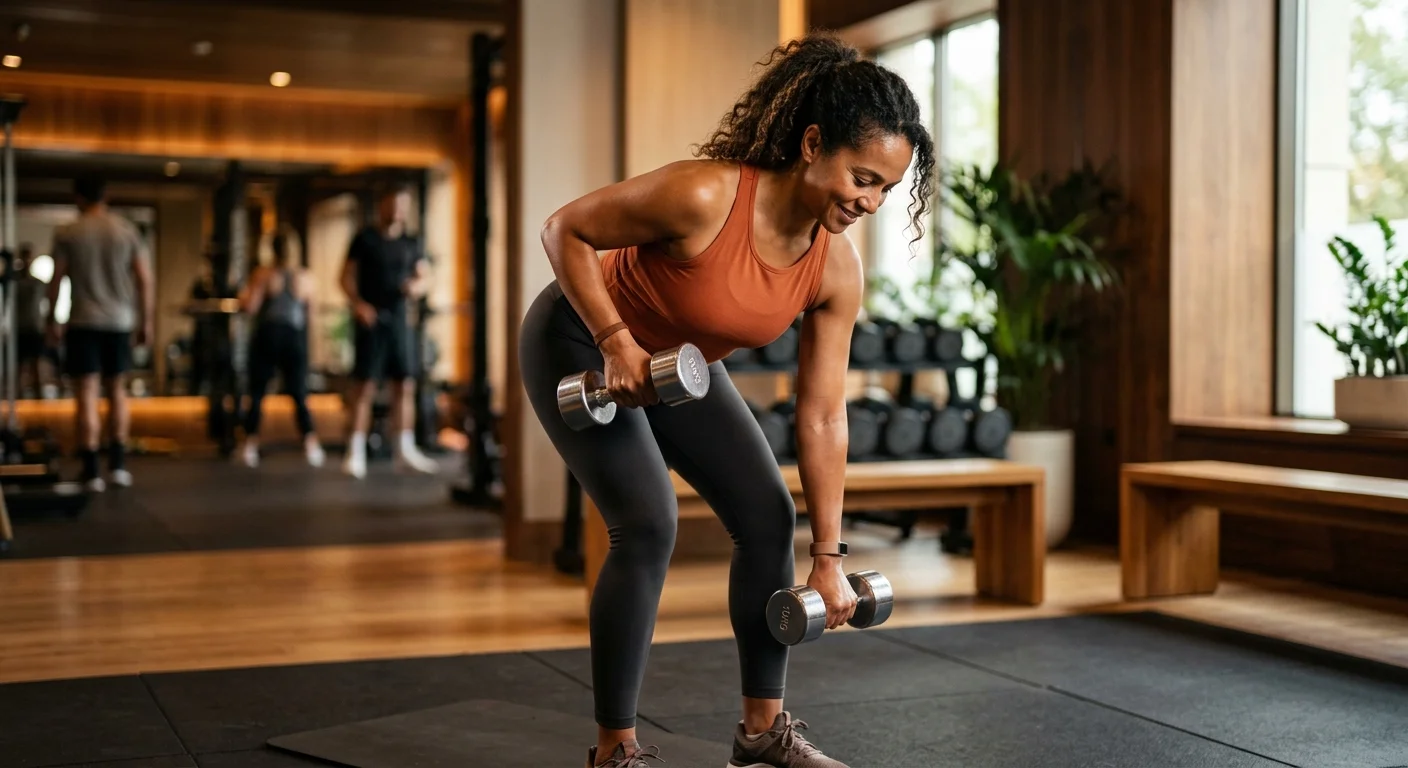
One of the more frustrating things about searching for prenatal workout plans is that most of what you find is either too vague to be useful, too cautious to matter, or written for someone already training at a high level. None of those work for most of the women I train: active, health-conscious, and trying to figure out what a real plan looks like across 40 weeks of significant physiological change.
What follows isn't a generic template. It's based on the same structure I use with clients, built around wherever your starting point actually is, with clear guidance on what stays in, what gets modified, and when. The plan draws on ACOG's 2020 recommendations and the 2019 Canadian Guideline for Physical Activity throughout Pregnancy, both of which support maintaining and even beginning moderate exercise across all three trimesters in uncomplicated pregnancies.
One note before anything else: this applies to uncomplicated pregnancies. If your OB has given you specific restrictions or flagged a condition that limits activity, those guidelines take priority over everything here.
The target is 150 minutes of moderate-intensity activity per week, spread across most days. For women who were already active before pregnancy, maintaining their routine with modifications is generally supported through the first and second trimesters, and often into the third.
A typical week for my clients looks like this: two full-body strength sessions of 40 to 50 minutes each, one to two cardio sessions (walking, swimming, or stationary cycling depending on trimester), and daily mobility work of 10 to 20 minutes built into cooldowns or done standalone. That's 3 to 4 sessions total, not 6. The goal is consistency over intensity, and building in enough recovery that your body isn't fighting two different demands at once.
Walking and swimming carry many of the same well-documented prenatal health benefits as strength training. Walking is among the best-studied prenatal exercises with consistent research support for gestational diabetes prevention, blood pressure management, and sleep quality. If a given week calls for a walk instead of a gym session, that's not a compromise.
The first trimester is mostly about keeping the habit alive. Progesterone surges, your body is burning enormous energy building a placenta, and fatigue can be significant. If you're getting in two or three sessions per week of any kind of movement, you're doing well. The goal isn't to build fitness. The goal is to maintain the habit and protect your strength base going into the second trimester, when things typically feel much better. For most women, energy starts coming back between weeks 12 and 14.
The second trimester is where you can do real work. Energy is usually up, nausea has settled for most people, and the belly is present but not yet mechanically limiting. Shortness of breath that was exercise-driven in the first trimester often improves in this window, before it returns later for a different reason: your uterus displacing your lungs. This is the time to lock in bracing patterns, build strength in the movements you'll rely on throughout the third trimester, and integrate the pelvic floor work that makes everything else more effective. I move clients into maintenance mode here because the goal has shifted from building to sustaining. Upper body and leg work generally don't need to change much. Core work is where adjustments start.
The third trimester is about smart modification and labor preparation. Balance shifts as your center of gravity moves forward. Single-leg exercises that felt stable at 20 weeks may feel unreliable by 30. Back-lying work should be minimized after roughly 20 weeks because of the weight of the uterus pressing on the vena cava, the vein that returns blood from the lower body to the heart. Most women will feel this as discomfort or dizziness fairly quickly, which is the cue to move. Starting around 28 to 30 weeks, I add a dedicated labor prep component: deep squats, cat-cows, hip circles, frog stretches, and child's pose. These aren't just flexibility exercises. They're preparation for labor positions and pelvic opening under load.
| Trimester | Sessions/week | Primary focus | Common modifications |
|---|---|---|---|
| First | 2–4 (match energy) | Maintain habit and base strength | Reduce intensity if fatigued; skip if nauseous |
| Second | 3–4 | Maintain strength, build bracing and pelvic floor habits | Limit back-lying from week 20; monitor core doming |
| Third | 3–4 | Maintain, add labor prep | Drop single-leg work if pelvic pain; avoid prone; add hip mobility |
The pelvic floor doesn't work in isolation, and treating it like an add-on is one of the most common mistakes in prenatal programming. Every compound movement, squat, deadlift, row, and press involves intra-abdominal pressure. That pressure affects the pelvic floor and the connective tissue running down the center of your abdomen. So the pelvic floor work has to be integrated into the lifts themselves, not bolted on afterward.
The cue I use is pre-bracing: before each rep, find the transverse abdominis (the deep layer that runs across your abdomen like a corset), engage it, and breathe through the rep without releasing that engagement. The tactile cue that tends to work best is placing your fingertips just inside your hip bones and gently drawing inward before you lift. Your belly shouldn't push out dramatically on the exhale. It should stay stable while your ribcage expands.
One thing to watch as the belly grows: it becomes easy to default to bracing with the larger, more superficial abs rather than the transverse abdominis. The feedback from clients is consistent: slowing down the setup, taking a breath, and deliberately cuing the deeper connection makes a meaningful difference in how stable everything feels during the lift. It takes practice, but it becomes automatic fairly quickly.
For standalone pelvic floor work, the most important thing to understand is that pregnancy calls for both contraction and relaxation training. Kegels strengthen the floor, but an over-tight pelvic floor creates its own problems, including difficulty with labor. See our full pelvic floor guide for pregnancy and postpartum for a breakdown of both sides of that equation.
Diastasis recti, the separation of the abdominal muscles along the midline, is common during pregnancy and not always preventable. But the way you train does affect how it progresses and how readily it responds to postpartum recovery.
The main signal to watch is coning or doming at the midline during an exercise: a ridge or bulge appearing along the center of the abdomen when you're under load. That means the exercise is producing more pressure than your system can currently manage, and you need to modify the movement before continuing. It's a useful guide, not a reason to stop lifting altogether.
In practice: traditional crunches and sit-ups typically get dropped by the second trimester, or earlier if coning appears. Planks get monitored and moved to an incline if needed. Dead bugs, pallof presses, and anti-rotation work generally stay in longer because they manage intra-abdominal pressure rather than generating spikes of it. Compound lifts stay in with proper bracing. The modification isn't usually the exercise itself. It's the breathing and bracing pattern around it.
This doesn't need to be a production. The basic principle is that you're already working harder than usual at baseline during pregnancy, so you don't want to train on an empty stomach or go too long between your last meal and a session.
Before training: have a small carbohydrate-containing snack 60 to 90 minutes out. Something easy to digest, a piece of fruit, toast with nut butter, oatmeal. Carbohydrates are your primary fuel during moderate-intensity exercise, and your body signals for them more strongly during pregnancy. If intense first-trimester nausea makes this difficult, focus on whatever you can actually keep down and eat when you can.
After training: prioritize protein in your next meal. Aim for 25 to 35 grams. Lean meat, eggs, Greek yogurt, legumes, or a protein smoothie all work. You need enough protein to support both fetal development and your own muscle maintenance throughout pregnancy. Research on protein intake during pregnancy generally supports intakes above the standard recommendation of 0.8 g/kg/day for active women, particularly in the second and third trimesters.
Hydration matters more during pregnancy. Dehydration can compound fatigue and nausea more readily than outside of pregnancy, and it's easier to fall behind than you might expect on active days. Most active pregnant women need 80 to 100 ounces of water on training days. Keep a bottle nearby during every session and don't wait until you're thirsty to drink.
One thing that surprises women in the second trimester: appetite around workouts increases noticeably. Your caloric baseline has gone up by 300 to 600 calories per day, and exercise adds to that. Eating more in response to genuine hunger is appropriate, not something to resist.
It will. That's not a pessimistic statement. It's just the reality of training through 40 weeks of significant physiological change. The adjustments I make most often with clients are dropping single-leg exercises when balance becomes unreliable, reducing load on compound lifts not because of strength limitations but because of pelvic pressure or abdominal tension, swapping floor work for seated or incline alternatives after 20 weeks, adding longer rest periods as cardiovascular demand increases with belly size, and replacing high-impact cardio with walking or swimming when joints get uncomfortable.
The framework for all of those is the same: the goal isn't to hold onto pre-pregnancy performance. The goal is to maintain your capacity for strength, movement quality, and recovery through the pregnancy and into postpartum. A squat at 35 weeks that looks different than it did at 10 weeks isn't a regression. It's an appropriate adaptation to where your body actually is.
For a detailed breakdown of what specifically changes in the final trimester, see our third trimester modification guide. And for everything related to strength work specifically, our full guide on lifting weights during pregnancy covers the question of load, intensity, and technique in more detail.
Three to four sessions per week, built around where you're actually starting from. Strength work plus walking or swimming plus daily mobility. Integrate pelvic floor engagement into your lifting rather than treating it as a separate workout. Watch for midline coning and modify the bracing, not just the exercise. Eat before you train, prioritize protein after, and drink water consistently throughout. Adjust as your body changes and don't confuse modification with failure.
Sources
ACOG Committee Opinion No. 804 (2020). Physical Activity and Exercise During Pregnancy and the Postpartum Period. Obstetrics & Gynecology. ACOG
Mottola MF et al. (2018). 2019 Canadian Guideline for Physical Activity throughout Pregnancy. British Journal of Sports Medicine. 52(21):1339-1346. PubMed
Davenport MH et al. (2018). Impact of prenatal exercise on neonatal and childhood outcomes: a systematic review and meta-analysis. British Journal of Sports Medicine. 52(21):1386-1396. PubMed
Stephenson RG, O'Connor LJ (2000). Obstetric and Gynecologic Care in Physical Therapy. APTA.
Barakat R et al. (2019). Exercise during pregnancy. A narrative review asking: what do we know? British Journal of Sports Medicine. 51(21):1619-1627. PubMed
Wu G et al. (2004). Dietary protein needs and protein intake in pregnancy. Journal of Nutrition. 134(6):1554S-1560S. PubMed


.webp)


