Brian Abell
Can You Lift Weights While Pregnant?
Exercise
.webp)
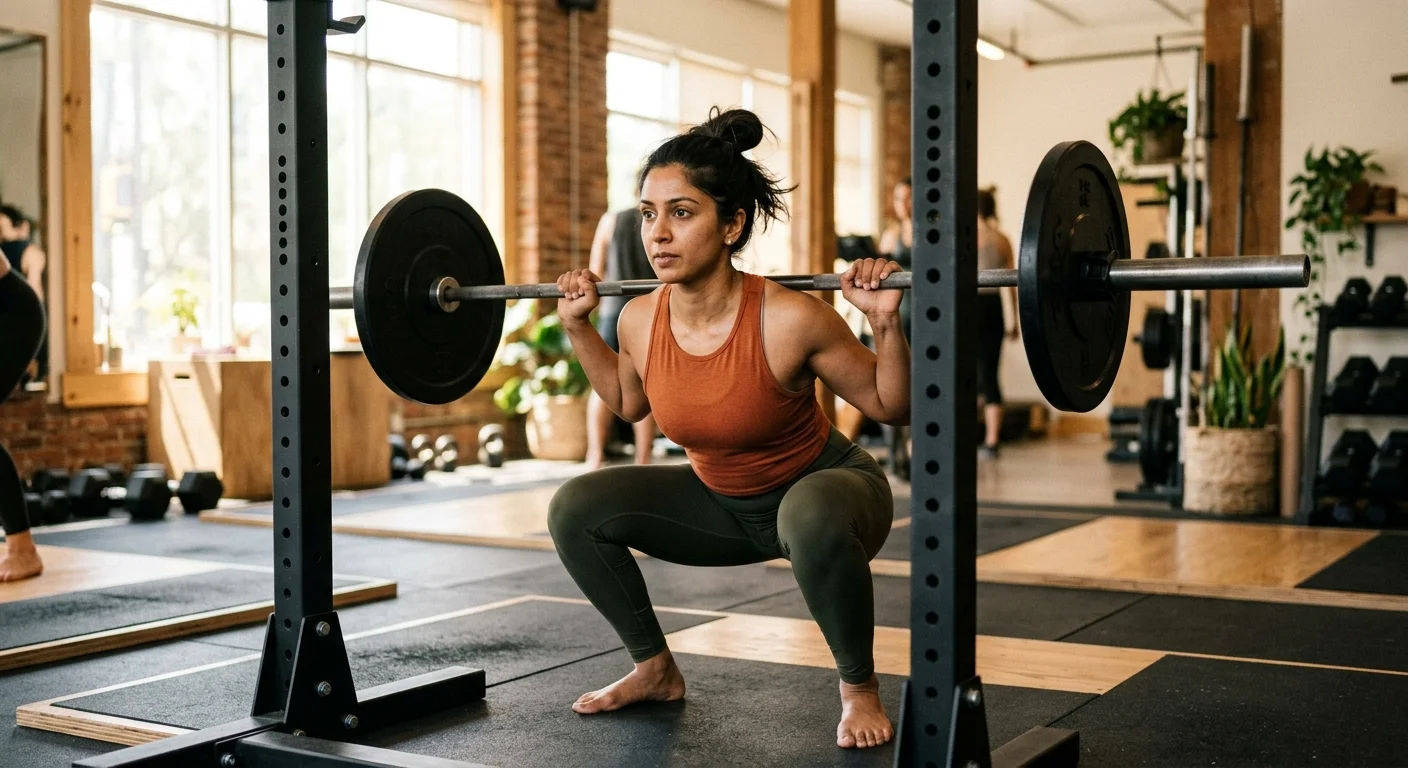
There's a persistent belief that any heavy lifting during pregnancy is risky, and women who push back on that often feel like they have to defend themselves to their OBs, their families, and the internet all at once. The evidence doesn't support the blanket restriction. What it supports is lifting with specific modifications, appropriate load selection, and ongoing awareness of how your body responds as it changes.
The concern behind the "no heavy lifting" advice usually comes from two places: the risk of abdominal trauma, and the cardiovascular demand of intense effort. Both are legitimate considerations. Neither points to avoiding strength training. They point to training with appropriate technique and intensity, which is good programming advice at any stage of life.
ACOG's 2020 guidelines explicitly state that resistance training is appropriate during uncomplicated pregnancies and that women who were strength training before pregnancy can continue. The word "continue" matters. You're maintaining capacity, not starting from scratch.
The modifications aren't about replacing your program. They're about three specific adjustments that become more relevant as pregnancy progresses.
The first is breathing. The Valsalva maneuver, holding your breath and bearing down hard during a heavy set, generates a significant spike in intra-abdominal pressure. Outside of pregnancy, that spike is manageable and actually helpful for generating tension on heavy lifts. During pregnancy, especially in the second and third trimesters, that pressure loads the linea alba and pelvic floor in a way that can cause or worsen diastasis and pelvic floor dysfunction. Switch to exhaling on the exertion instead. It produces somewhat less tension, so you may need to reduce load slightly, but the bracing still works and the pressure on the midline drops considerably.
The second is position. After about 20 weeks, sustained lying flat on your back compresses the vena cava and can reduce blood return to the heart. Replace flat bench pressing with incline pressing at 30 to 45 degrees. Replace floor-based horizontal pulling with cable rows or machine rows. The movements stay. The position shifts.
The third is load selection by feel rather than by fixed numbers. Your cardiovascular system is working harder at rest during pregnancy, your blood volume is higher, and the mechanical demand of carrying additional weight means that a given load may feel heavier than it did pre-pregnancy. Adjust accordingly. An RPE (rate of perceived exertion) of 6 to 7 out of 10 is a reasonable guideline for most strength work during pregnancy. You're working, but you could do a couple more reps if needed.
In the first trimester, load selection is often driven more by how you feel than by physiological limits. Fatigue, nausea, and lightheadedness are all common and can make your usual training weights feel much heavier. Reduce load, maintain the movement pattern, and keep the habit. The goal is to arrive at the second trimester with your base of strength intact.
In the second trimester, most women find a window where training feels closer to normal. This is the time to solidify technique and maintain load, not to push for new maximums. What often changes here is rest periods: take longer rests than usual because your cardiovascular recovery is slower. Two to three minutes between heavy sets is reasonable.
In the third trimester, load generally decreases on its own because of mechanical changes. Squats and deadlifts feel different with a significant belly. Balance is harder to maintain. Abdominal tension during heavy sets is harder to manage. Follow the cues from your body rather than the numbers from your previous program. Upper body pressing and pulling tend to stay closer to pre-pregnancy loads for longer. Lower body and trunk work modifies more.
| Movement | Modification | When it applies |
|---|---|---|
| Flat bench press | Move to 30-45 degree incline press | Starting around 20 weeks |
| Back squat | Goblet squat or front squat (easier to brace); reduce load as belly grows | Second/third trimester based on comfort |
| Conventional deadlift | Sumo stance to make room for belly; reduce load based on abdominal tension | Second/third trimester |
| Prone exercises (planks, push-ups flat) | Move to incline or wall variations | Starting around 16-20 weeks |
| Heavy Valsalva sets | Exhale on exertion; accept modest load reduction | Throughout pregnancy |
This is actually more common than the "is it safe?" question among my clients who were already training. Women who've built a strength practice worry about losing it. They worry about the postpartum recovery being harder if they stop. They worry about what nine months of significant detraining does to their body.
Those concerns are legitimate. Research suggests that maintaining strength through pregnancy supports a better functional starting point postpartum. Studies on prenatal exercise outcomes have found associations with more rapid return of core function and lower risk of depressive symptoms postpartum, though postpartum depression is multifactorial and exercise is one contributing factor among several. The goal during pregnancy isn't to build strength. It's to maintain enough that the recovery after delivery starts from a stronger place.
The flip side: pushing through signals your body is giving you because you don't want to back off is counterproductive. Pelvic pressure during deadlifts, midline coning during core work, and leakage during squats are all signals that the current load exceeds what the system can manage safely. Adjust and keep training. Don't push through and keep training at the same load.
A 2017 review of exercise during pregnancy found that resistance training was associated with reduced risk of gestational diabetes, lower rates of excessive weight gain, and better functional capacity through delivery. The available evidence has not found that appropriate prenatal strength training increases risk of preterm labor, fetal distress, or low birth weight in uncomplicated pregnancies, though research in this area continues to evolve.
The word "appropriate" carries the weight in that sentence. Appropriate means load that generates effort without maximal breath-holding, positions that don't compress the vena cava, and intensities that don't drive heart rate to sustained maximums. That describes a slightly modified version of normal strength training, not an entirely different activity.
For a full breakdown of how the week-by-week program comes together, see our prenatal workout plan guide. It covers the full structure from first trimester through labor prep.
Sources
ACOG Committee Opinion No. 804 (2020). Physical Activity and Exercise During Pregnancy and the Postpartum Period. Obstetrics & Gynecology. ACOG
Barakat R et al. (2017). Exercise during pregnancy. A narrative review asking: what do we know? British Journal of Sports Medicine. 51(21):1619-1627. PubMed
Davenport MH et al. (2018). Impact of prenatal exercise on neonatal and childhood outcomes. British Journal of Sports Medicine. 52(21):1386-1396. PubMed
Bø K et al. (2016). Exercise and pregnancy in recreational and elite athletes: 2016 evidence summary from the IOC expert group. British Journal of Sports Medicine. 50(10):571-589. PubMed


.webp)


