Brian Abell
Third Trimester Exercise: What to Modify
Exercise
.webp)
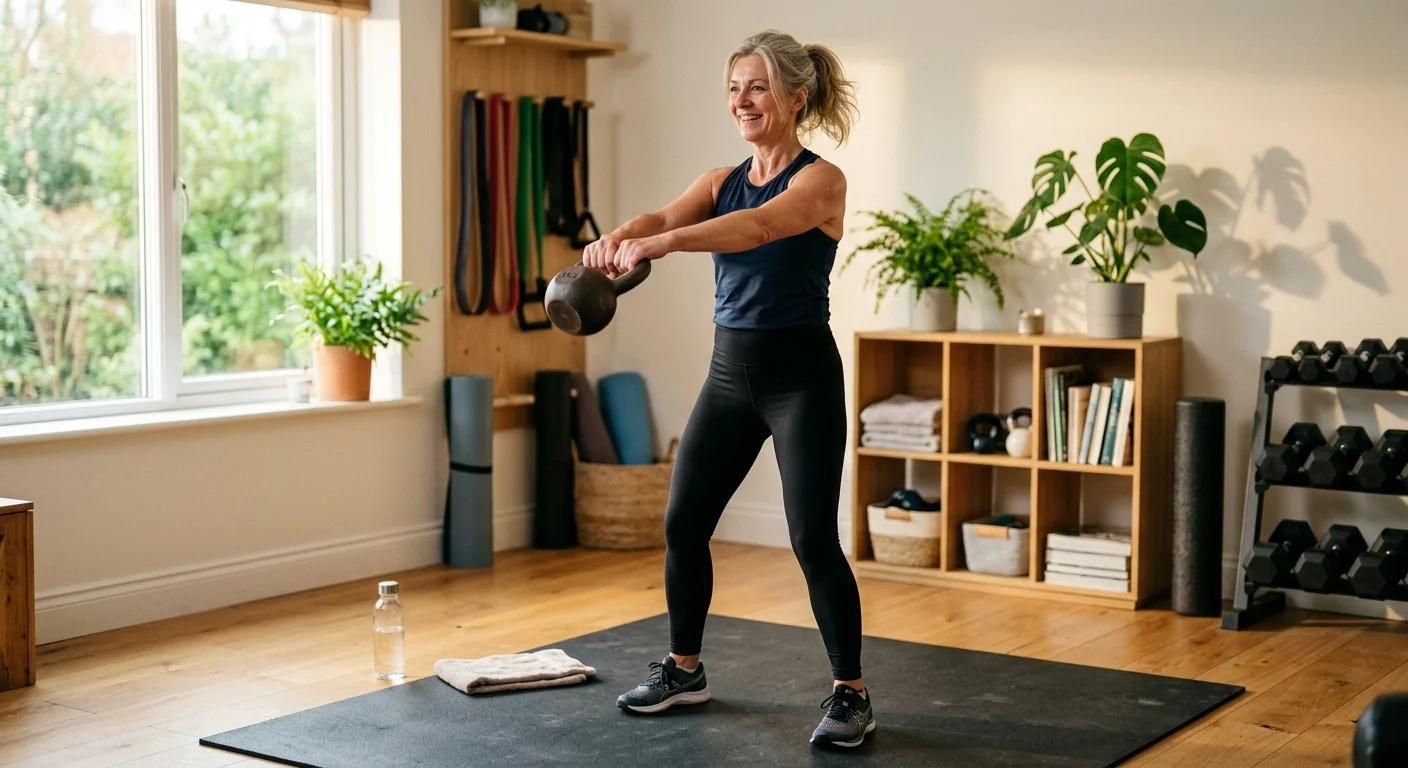
The third trimester doesn't mean stopping. What it means is paying closer attention to a handful of specific signals and making adjustments that let you keep training effectively without adding stress to a body that's already doing a lot of work.
Most of what changes is mechanical. Your center of gravity has shifted forward. Your hips are wider. Relaxin, the hormone that loosens ligaments throughout pregnancy, has been building in your system for months, which means your joints have more range of motion than usual but less structural support. Those factors combine to change how certain exercises feel and which ones are worth keeping.
For runners, lifters, and anyone who was highly active before pregnancy: the third trimester is not the time to push intensity or try to hold onto performance benchmarks. That's not a permanent change. It's a temporary strategy to protect the work you'll need to do in postpartum recovery. Start with our full trimester-by-trimester guide if you want the broader picture first.
The concern is the vena cava, the large vein that runs along the right side of your spine and carries blood from your lower body back to your heart. As your uterus grows, lying flat on your back can compress that vein and reduce blood return to the heart, which drops blood pressure and reduces oxygen delivery to both you and the baby.
Most women will feel this as dizziness, nausea, or lightheadedness fairly quickly, which is the natural prompt to move. A small number of people don't feel it immediately, which is why the general guideline is to start avoiding sustained back-lying around 20 weeks, not to wait until it's uncomfortable. Your OB can give you a clearer sense of how strict to be based on your specific anatomy.
In practice: exercises that put you flat on your back get replaced with incline versions (a bench set to 30 to 45 degrees works for most chest and shoulder pressing movements), or with standing or seated alternatives. If you wake up and realize you rolled onto your back during the night, roll to your side and move on. An accidental few minutes isn't the same as sustained compression during a workout set.
Single-leg exercises, like reverse lunges, step-ups, and single-leg Romanian deadlifts, become harder to stabilize as your belly grows because your center of gravity has shifted and the demand on your hip stabilizers increases while your ligament integrity is reduced by relaxin. For most women, the point to pull back isn't a specific week. It's when those movements start feeling genuinely unstable, or when pelvic pain shows up during or after the session.
Pelvic girdle pain, the discomfort that sometimes appears in the front or sides of the pelvis in pregnancy, is common and made worse by asymmetric loading. If single-leg work is triggering it, swap to bilateral movements: goblet squats, leg press, sumo deadlifts, and Romanian deadlifts with both feet on the ground. Those load the hips and legs without creating the shear force that tends to aggravate the pelvic joints.
Braxton Hicks are practice contractions: the uterus tightening and releasing without progressing toward labor. They're common in the third trimester, especially during physical activity or dehydration. They feel like a tightening across the abdomen, usually painless, and they stop when you change position or rest.
A few Braxton Hicks during a cardio session is not a reason to stop. Frequent, rhythmic, or painful contractions are. The general rule is: if contractions are happening more than four times in an hour, are accompanied by back pain or pelvic pressure, or don't stop with rest and water, stop exercising and contact your OB. That pattern can indicate preterm labor, not just Braxton Hicks. The distinction matters.
From a practical standpoint, staying well hydrated during workouts reduces the likelihood of Braxton Hicks becoming disruptive. Dehydration is a known trigger.
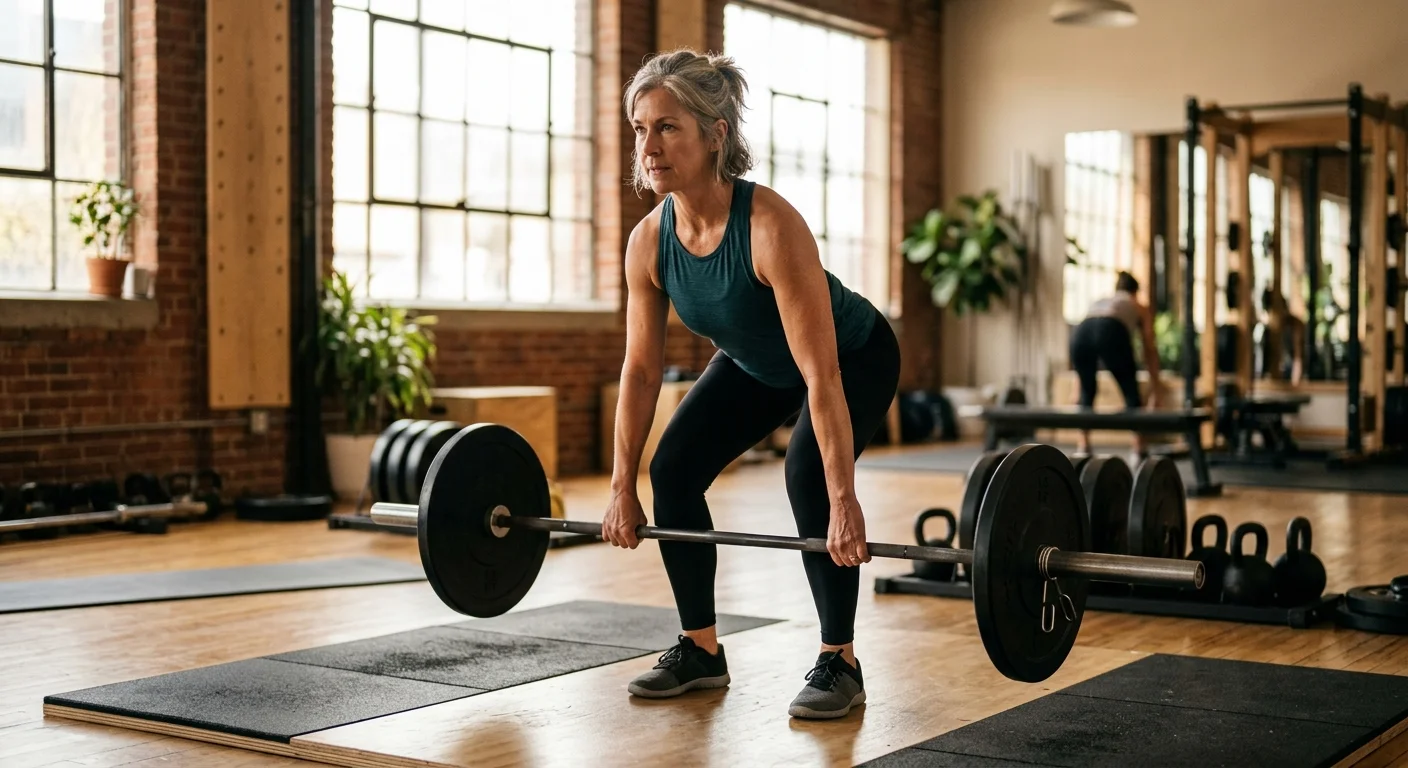
For most movements, the change is less dramatic than people expect. Upper body work, including rows, presses, curls, and lat work, stays largely the same with the position adjustments already mentioned for back-lying movements. Lower body compound work continues with bilateral loading. The adjustments tend to be in load (down modestly based on feel, not a fixed percentage), rest periods (longer because your cardiovascular system is working harder at baseline), and core loading (off the floor, less compression, more bracing under load).
What I watch for in clients is the Valsalva maneuver on heavy sets: the instinct to hold your breath and bear down hard when lifting. That generates a significant spike in intra-abdominal pressure that's worth avoiding in late pregnancy, particularly if you're already managing any pelvic floor heaviness or diastasis. Exhale on the exertion instead. It produces less pressure and keeps things moving without loading the pelvic floor at the wrong moment.
| Exercise category | Third trimester approach |
|---|---|
| Back-lying pressing (bench, floor press) | Replace with incline (30-45 degrees) or standing/seated press |
| Single-leg work | Reduce or swap to bilateral if pelvic pain or instability appears |
| Prone work (planks, push-ups flat) | Move to incline push-ups or wall push-ups from about 16-20 weeks |
| Heavy compound lifts (squat, deadlift) | Continue with bracing focus; no Valsalva; reduce load as comfort dictates |
| High-impact cardio | Reduce or swap to walking/swimming if pelvic floor symptoms appear |
| Core work | No crunches; anti-rotation and breathing work stays in; monitor midline |
Starting around weeks 28 to 30, I add a labor prep component to clients' programs. Not as a replacement for their regular training, but as a standalone piece they can do daily or work into their cooldowns. The goal is to build familiarity with the movements and positions that support labor, not to start them cold in the delivery room.
The movements: deep goblet squats held for time, which open the pelvis and build the hip mobility needed for pushing positions. Cat-cow and spinal circles on all fours, which mobilize the lumbar spine and pelvis. Frog stretch variations, which address the adductors and allow the pelvis to widen. Child's pose with knees wide, which opens the hips and also teaches pelvic floor relaxation under a stretch. Hip tilts and hip circles, which keep the sacroiliac joint mobile as the baby's head begins to descend.
These aren't magic. But the women who come into labor with mobile hips, a trained pelvic floor, and familiarity with labor positions often report feeling more confident and less caught off guard by what their body is doing. That matters.
Research supports that women who maintained strength and pelvic floor connection through pregnancy tend to have better functional starting points for postpartum recovery, whether vaginal or cesarean. The pelvic floor connection you built, the core bracing patterns you reinforced, the hip and glute strength you maintained: all of that gives you more to work with after delivery. See our full guide on when and how to return to exercise postpartum for what to expect after delivery and how to rebuild from there.
Sources
ACOG Committee Opinion No. 804 (2020). Physical Activity and Exercise During Pregnancy and the Postpartum Period. Obstetrics & Gynecology. ACOG
Artal R, O'Toole M (2003). Guidelines of the American College of Obstetricians and Gynecologists for exercise during pregnancy and the postpartum period. British Journal of Sports Medicine. 37(1):6-12. PubMed
Bø K et al. (2016). Exercise and pregnancy in recreational and elite athletes: 2016 evidence summary from the IOC expert group meeting. British Journal of Sports Medicine. 50(10):571-589. PubMed
Pennick V, Liddle SD (2013). Interventions for preventing and treating pelvic and back pain in pregnancy. Cochrane Database of Systematic Reviews. PubMed

.webp)


